
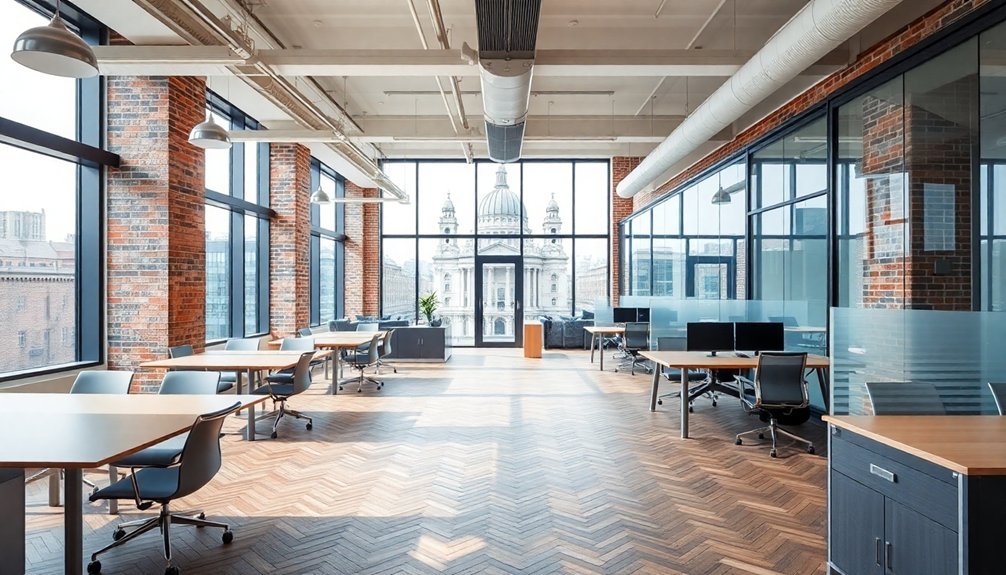
Office refurbishment in Ludgate Hill, EC4M demands careful planning and expert execution to change workspaces while preserving the area's historic character.
Local specialists understand building regulations and provide customised solutions that respect both business needs and design heritage.
Success hinges on clear communication, realistic budgets with 10-15% contingency, and phased implementation to minimise interruptions.
The right contractor brings innovative design knowledge while maintaining efficient project management – essential elements for any Ludgate Hill overhaul.
Choosing The Right Office Refurbishment Company In Ludgate Hill
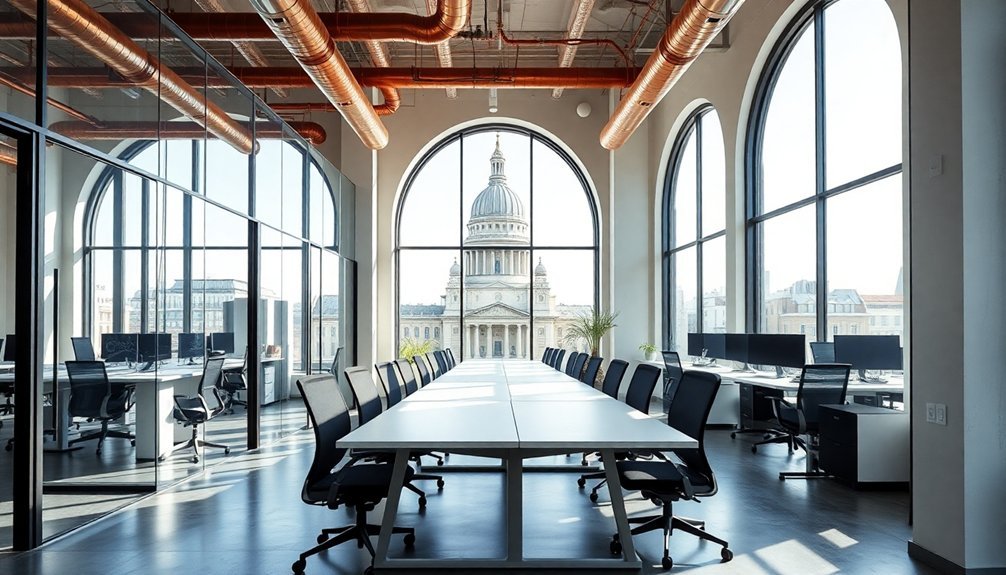
When starting on an office refurbishment project in Ludgate Hill, selecting the right company stands as one of the most essential decisions a business can make. The company evaluation process should begin with thorough research into potential contractors' reputations, experience, and past projects in the area.
A successful refurbishment partner demonstrates strong project communication skills, maintains transparent pricing, and shows commitment to sustainable practices. Look for companies with proven track records in similar office spaces, positive client testimonials, and proper certifications. Consider their approach to minimising workplace disturbances and their ability to incorporate innovative solutions. The ideal contractor should align with your company culture while offering clear project timelines, detailed cost breakdowns, and effective problem-solving strategies. Their portfolio should showcase proficiency in modern office design and energy-efficient implementations. Additionally, a focus on sustainability practices can further enhance the overall value of the refurbishment.
Planning Your Office Refurbishment In Ludgate Hill
Successful office refurbishment in Ludgate Hill begins with careful planning and a clear vision for the project's outcomes. Companies must assess their current space, establish realistic budgets, and develop thorough timelines that account for potential interruptions.
The planning phase should prioritise employee engagement through collaborative design workshops and feedback sessions, guaranteeing the new space meets everyone's needs. Incorporating sustainability practices into the refurbishment plan, from material selection to energy-efficient systems, demonstrates environmental responsibility while reducing long-term operational costs.
Key considerations include obtaining necessary permissions from landlords, securing appropriate building permits, and establishing a solid communication strategy to keep stakeholders informed. Working with experienced local contractors who understand Ludgate Hill's unique design features and building regulations will help guarantee a smooth conversion process.
Practical Tips For A Successful Office Refurbishment In Ludgate Hill
To achieve outstanding results in office refurbishment projects within Ludgate Hill, businesses must focus on implementing practical, well-researched strategies that balance aesthetics with functionality. Success hinges on thoughtful planning and effective employee engagement throughout the renovation process.
Smart office refurbishment combines strategic planning with employee input to create functional, beautiful workspaces that enhance productivity and satisfaction.
Key strategies for a successful office refurbishment include:
- Establish clear communication channels to keep staff informed about project timelines and temporary arrangements
- Create a detailed budget with a 10-15% contingency for unexpected costs
- Schedule intrusive work during off-peak hours to maintain productivity
- Implement changes in phases to minimise workplace interruptions
Key Phases Of An Office Refurbishment In Ludgate Hill
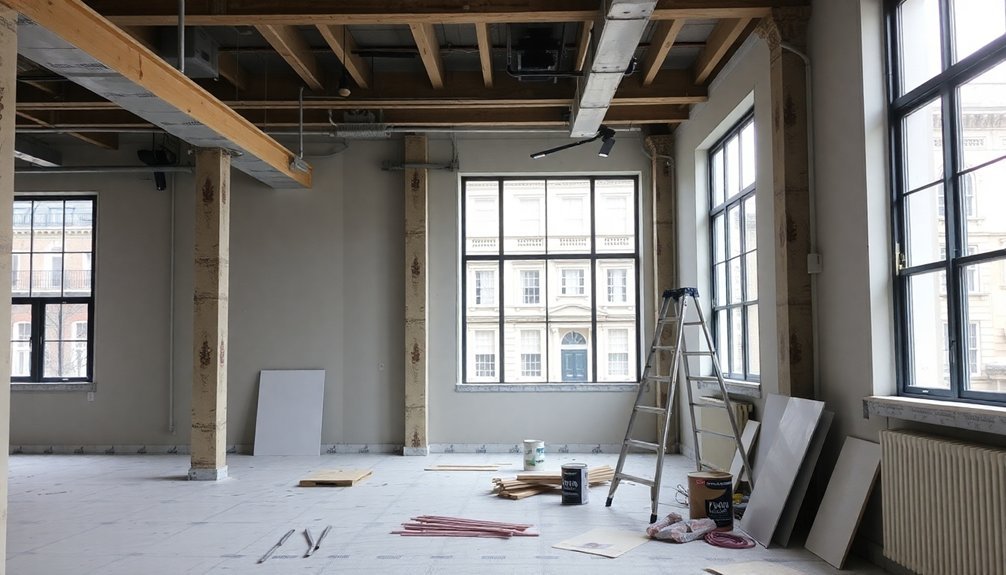
Understanding the key phases of an office refurbishment in Ludgate Hill enables businesses to navigate through the renovation process with confidence and precision. The process begins with thorough planning and assessment, where creative concepts take shape through employee feedback and data-driven analysis. Next comes budgeting and project management, followed by the design phase, which focuses on ideal space utilisation and brand alignment. The execution phase changes plans into reality, with contractors working strategically to minimise business interruptions. Finally, the completion phase guarantees all specifications are met through quality inspections and feedback gathering. Each phase builds upon the previous one, creating a seamless flow that turns outdated offices into vibrant, modern workspaces that inspire productivity and innovation in the heart of Ludgate Hill.
About Ludgate Hill
Nestled in the heart of London's historic centre, Ludgate Hill stands as one of the city's three ancient hills, boasting a rich heritage that spans nearly two millennia. The area's Ludgate Hill history traces back to Roman times when the first Lud Gate was constructed around 200 AD, serving as a vital entrance to the ancient settlement of Londinium.
Today, this lively district showcases extraordinary architectural significance through landmarks like St Paul's Cathedral and the Guild Church of St Martin. While the original gate was demolished in 1760, its legacy lives on through preserved statues at St Dunstan-in-the-West church and a commemorative blue plaque. The area has evolved into an ever-changing commercial hub, seamlessly blending its historical charm with modern developments like Paternoster Square and the London Stock Exchange.
One of Ludgate Hill’s practical advantages is its transport connectivity. With Bank, Liverpool Street, Moorgate and Farringdon stations providing access to the Central, Northern, Circle, Hammersmith & City, Metropolitan and Elizabeth lines, employees and clients benefit from reliable, well-connected routes into and out of the area.
The Ludgate Hill business environment centres around global banking, insurance, fintech and professional services. The area is home to the Bank of England, Lloyd’s of London and a growing cluster of fintech startups. Office spaces here range from heritage listed buildings to modern glass towers. A workspace that reflects the professionalism of this commercial area helps businesses build trust with clients and partners.
Central London office refurbishment here requires careful coordination with building management, consideration of listed building constraints and often out-of-hours working to minimise disruption to neighbouring tenants. We have a strong track record of delivering refurbishment projects in and around Ludgate Hill, and our familiarity with local conditions helps us manage every aspect of your project efficiently.
Frequently Asked Questions
What does an office refurbishment in Ludgate Hill typically include?
A typical office refurbishment in Ludgate Hill, EC4M includes space planning, new flooring, decoration, lighting upgrades, furniture supply, partitioning and electrical work. Many clients also opt for improved ventilation, acoustic treatment and technology upgrades. We tailor every project to your specific requirements and budget.
Is sustainable office refurbishment available in Ludgate Hill, EC4M?
Absolutely. We offer sustainable refurbishment options for Ludgate Hill offices including LED lighting, energy-efficient HVAC systems, recycled and low-VOC materials, and improved insulation. Sustainable refurbishment can reduce your energy costs by up to 30% while creating a healthier workspace for your team.
What is the ROI of office refurbishment in Ludgate Hill?
Office refurbishment in Ludgate Hill delivers measurable returns through increased employee productivity, improved staff retention and reduced energy costs. Studies show that well-designed workspaces can boost productivity by 15-20%. A modern, well-presented office also strengthens your brand image with clients and helps attract top talent.
How do I choose the right office refurbishment company in Ludgate Hill?
When selecting an office refurbishment contractor in Ludgate Hill, EC4M, look for relevant experience with similar-sized projects, proper insurance and accreditations, transparent pricing with no hidden costs, and strong references from previous clients. A good contractor will also provide a detailed project plan and single point of contact throughout.
Also Serving Nearby Areas
We also provide office refurbishment services in these nearby areas: Office Refurbishment in St Paul’s, EC4M | Office Refurbishment in Mansion House, EC4N | Office Refurbishment in Temple, EC4Y | Office Refurbishment in Chingford, E4 | Office Refurbishment in Highams Park, E4
Taking the Next Step – Partnering With a Local Ludgate Hill, EC4M based Office Refurbishment Specialist
When undertaking an office refurbishment project in the historic Ludgate Hill area, partnering with a local specialist can make all the difference. Local collaboration guarantees a deeper understanding of building regulations and faster response times, while maintaining project transparency throughout the process.
These specialists bring extensive design knowledge and an intimate understanding of the EC4M area, offering customised solutions that respect both contemporary business needs and local architectural heritage. Their efficient project management approach minimises interference to daily operations while maximising efficiency in planning and execution.